Saturday, December 22, 2012

The Amazing Raja Ampat - Wonderful Indonesia

Raja Ampat (Papua - Indonesia) is a tour destination for all reasons to visit. From the highest point in the sky down to the ocean floor, Raja Ampat has the fascinating beauty for everyone. If there is a tour destination you must visit at least once in a lifetime, Raja Ampat is one of them.


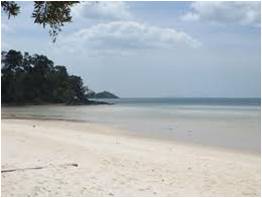
World's Last Paradise, this is the name Raja Ampat archipelago is widely known and called today. It may sound an exaggeration, but not for those who have been there. Raja Ampat archipelago consists of a group of large and small islands, strands of coral reefs, mountains, tropical forests, white sandy beaches and varieties of wildlife making Raja Ampat’s landscape an unmatched beauty.


The landscape of Raja Ampat is beautifully crafted like strings of pearls enchanting everyone who sees it. It is really not easy to find the right phrases to describe the beauty. The scenery of Raja Ampat is a natural view which will make your heart tremble, your breath stuck and your skin goose bumps when you look at it. Its beauty will make some of you to shed the tears admiring just how magnificent and merciful Creator giving the natural resources Raja Ampat archipelago.


Tuesday, May 29, 2012

Mysterious Monuments in the World

1. Apocalypse


On a barren hill in northeastern Georgia stands one of the monuments of the world's most bizarre and mysterious. But that was not created during ancient times. Known as the 'Georgia Guidestones', a stone structure with a height of 16 meters, 20 tons of polished granite slabs and written in eight languages.

2. Lake Michigan Stonehenge.

The researchers were quite surprised when they find what appears to be ancient structures like Stonehenge 40 meters below the water surface of Lake Michigan. 

3. Underwater Ruins in Japan.

On the southern coast of Yonaguni, Japan, lie submerged ruins, an estimated 8,000 years. It was found in 1995 by a diver who strayed too far from the coast of Okinawa with camera in hand. 

4. Submerged Wonders of Alexandria, Egypt.

Off the coast of Alexandria, the city of Alexander the Great (Iskandar Zulkarnain, cousin of the Prophet Khidr), the absence of what is believed to be the ruins of Cleopatra's kingdom. It is believed that earthquakes over 1,500 years ago makes this building fell into the sea, along with artifacts, statues and other parts of the palace of Cleopatra.

5. The Mysterious Stones of Baalbek.

Largest Roman temple once stood, was found not built on the ruins of Greece or Rome, but in Baalbek, Lebanon. No one knows what makes this site so special in Rome, to encourage them to build, move and assemble so many stone blocks.

6. Easter Island. 
 

Easter Island, also known as Rapa Nui in the South Pacific Ocean, the most famous monumental sculptures created by the Rapanui people. It weighs about 86 tons, which describe how great achievements Rapanui people who have created and move them. 

7. Stonehenge. 
 
One of the world famous monument is probably the Stonehenge, located in Wiltshire England. Although theories and speculations have sprung up, no one knows what the original purpose of prehistoric monuments and remains one of the greatest mysteries of the world.

8. Machu Picchu.


Machu Picchu is the best preserved beautiful city of the Inca Empire, located in the Andean highlands of Peru, on a steep mountain with a nearly flat surface.

9. Great Zimbabwe Ruins.
 

Few people know that the modern African country, Zimbabwe, there are ruins of stone, situated in the countryside. The Great Zimbabwe Ruins are some of the oldest and largest structures in South Africa.

10. Peru's Chavin de Huantar Ruins.

Although not as famous as the ruins of Machu Picchu, the ruins of Peru Huantar Chavan is also an interesting legacy. So obvious, why Chavan culture has disappeared, although some communities believe that the ruins Huantar Chavan provide clues about why some civilizations vanish.

Thursday, February 24, 2011

Thailand Cultural Heritage and Traditions among His Modern Tourism

For years now, Thailand has been a major tourist destination for those seeking beautiful beaches, a vibrant nightlife and an endless variety of crowded clubs and bars.

However, if you’re looking for a more cultural experience, the country also has a lot to offer with its gorgeous shrines and historical palaces. Most of these landmarks are very well-maintained — evidence that, despite changing times, Thais still hold tight to their cultural heritage and traditions.

Since I never really liked clubs or bars, I was very excited when I was offered the opportunity to visit two of the most important cultural heritage landmarks in Thailand during a brief stay there last January.

Our first destination was Phra Narai Rajanivet or the King Narai Palace, which was built by King Narai the Great who ruled Ayutthaya from 1656 to 1688. Ayutthaya was a Siamese kingdom that existed from 1351 to 1767.

The palace is located in Muang district, Lopburi province, a charming small town approximately 150 kilometers northeast of Bangkok, about a 2.5 hour-long bus ride. Along the way you’ll get the chance to see many buildings built in both rustic and classical Thai architectural styles.

Lopburi was once considered perfect for trading because it was surrounded by water. King Narai chose to stay in the palace almost year round, except for during the rainy season, when he preferred to return to Ayutthaya.

“At that time, King Narai felt like Ayutthaya was no longer safe as the capital city, so he decided to build a palace here in Lopburi,” Natalie, our tour guide, told us.

Natalie said that King Narai’s kingdom had close friendships with Persia and India, which is reflected in the architecture of many of the palace’s buildings. Some of the buildings have curved, vaunted ceilings, similar to those found in many Persian palaces.

“It is said that, back in the day, this palace was exquisitely beautiful. When the night came, thousands of candles were lit and it looked marvelous,” Natalie said.

Most parts of the palace complex have been reduced to ruins, but some buildings remain intact — including the Chantara Phisan Pavilion that is now used as a museum. It contains an excellent collection of Buddhist manuscripts, palanquins and paintings in memory of King Narai.

“This building was renovated in the 1960s,” said Natalie.

After King Narai’s death in 1688, the palace was abandoned until King Rama IV restored it in 1856.

“You might remember King Rama the IV from the musical ‘The King and I’ or ‘Anna and the King’,” Natalie said.

The next day I decided to join some friends visiting the Grand Palace or Phra Borom Maha Ratcha Wang, located in the heart of Bangkok. Since it was a nice sunshiny day, we decided to take a tuk-tuk, or an auto-riskshaw.

I was giddy with anticipation because I have heard a lot about the palace. I was hoping it would live up to my expectations.

“You can’t say you’ve been to Bangkok if you don’t take time to see the Grand Palace, it’s truly a masterpiece of art, so breathtaking,” Jun, our tuk-tuk driver, explained in fluent English.

The Grand Palace complex was built in 1782 and the 218,000 square meter complex consists of the royal residence, throne halls and a number of government offices. It is also the home of the Emerald Buddha, one of the most sacred Buddhist sites in the world, where Thai Buddhists can be seen praying and paying their daily respects.

Since it was Saturday, the palace grounds were packed and I ran into dozens of Indonesian tourists on the grounds.

To enter the palace, we first had to purchase tickets for 350 baht ($11) per person. Jun had warned me that the ticket booth was only open until 3:30 p.m, but visitors are allowed to stay inside the complex until 4 p.m. The dress code for the palace is quite strict. Men must wear long pants and shirt sleeves, while women should wear long skirts or pants, while tank-tops are strictly prohibited. Just outside the palace, there are many stalls that rent clothes to those who show up improperly dressed.

The whole complex is mesmerizing. Consisting of 43 buildings, I was stunned by all of its golden shrines and the gigantic stupas, each meticulously carved down to the tiniest detail.

I certainly did not want to miss the opportunity to see the Emerald Buddha, a tall sculpture carved from a single block of emerald green jade clad in traditional Thai garb that is changed three times a year, depending on the season. Unfortunately no cameras are allowed inside the shrine.

The Emerald Buddha was discovered in 1434 in a stupa in Chiang Rai and remains a venerated site for Thai Buddhists. The complex holding the shrine also serves as the monarchy’s private chapel.

All visitors are asked to take off their shoes before entering the temple where the Emerald Buddha reclines. Thais bowed respectfully before the statue.

Natalie said that, despite Bangkok’s adaptation to and fondness for modern life, most Thais are practicing Buddhists. She said that most young Buddhist men live as monks for a few months once they reach 20 years of age. They live in a temple and eat modestly.

“In the old days, women would refuse to marry men who haven’t lived as monks as they would not be considered adults,” she said.

I left Thailand the next day sure of one thing — despite the country’s Buddhist majority, other religions and faiths are allowed to flourish peacefully. All Thai people seem to share a common respect for the country’s cultural heritage. It is the kind of respect and harmony that seems to be missing here in Indonesia. Maybe someday we can achieve the same state of religious and cultural harmony. Source

Saturday, February 12, 2011

Batam Island, Experience It – Wonderful Indonesia


Batam Island, just 40 years ago a fishing village with little contact with the outside world. Located only 20km from Singapore and 25km from Johor in Malaysia. The declaration of the Batam free trade zone in 1989 has turned the island upside down, after just a few years of rapid construction it now has a modern airport, tourist and business centers and a still growing infrastructure that has changed the island completely. Today it is a melting pot of diverse ethnic cultures and customs from all of Indonesia's 33 provinces. It is now part of the Riau Islands province and home to some half a million people.
After Bali, it is the most visited port in Indonesia, attracting some 100,000 visitors every month. Infact, Batam is actually one of fastest growing tourist destinations in Indonesia in terms of visitor arrivals. There are several tourist resorts here with luxurious hotels and golf courses. Lets get around and have unforgettable memories of Batam and the surrounding 300 or so smaller islands around it. Explore this maritime paradise just an hour's boat ride from Singapore or Johor Bahru in Malaysia.
Indonesian (Bahasa Indonesia) is modeled on the version of Malay which originates from Riau on the Sumatra mainland and the Riau Islands. In fact, Riau Malay is regarded as quite similar to the Malay language and visitors from Malaysia will find the Indonesian spoken here very similar to Bahasa Malaysia, which is the version of Malay spoken back home.
Batam also have a large population of ethnic chinese Indonesians, who also can speak Hokkien (Fujian), Teochew and Mandarin. Besides, there are also large population of migrants from various parts of Indonesia who speak many different kinds of Indonesian dialects. 
All Batam ports, namely Harbour Bay (Jodoh), Batam Centre, Nongsapura, Sekupang and Waterfront City (Teluk Senimba) are visa-free and visa-on-arrival ports of entry.

By plane

Batam's airport is the Hang Nadim International Airport (BTH). Nearly all flights are domestic where you can get direct connections to Jakarta, Surabaya, Medan, Pekanbaru, Jambi, Palembang, Pontianak, Yogyakarta and Bandung. Indonesian carriers Garuda Indonesia, Merpati, Lion Air, Riau Airlines, Kartika Airlines, Batavia Airlines and a host of others provide the links. One can travel to Yogyakarta from Batam.
There are also direct flights to Johor Bahru and Subang airport Kuala Lumpur in Malaysia, and direct flight to Seletar Airport Singapore.

By boat

The main seaports on Batam are Batam Centre, Sekupang, Waterfront City, Nongsapura and Telaga Punggur. The main city of Nagoya is now served by Harbour Bay (Jodoh), replacing the old Batu Ampar ferry terminal.
Batam Center Ferry Terminal has the most frequent ferry connections to/from Singapore and Johor Bahru. Sekupang, with ferries from Singapore is best used for those catching domestic connections to the Sumatra mainland and the Karimun Islands. Waterfront City and Nongsapura mostly serve adjacent resorts while Telaga Punggur is the main ferry terminal for boats to and from Bintan. Harbour Bay is monopolized by Berlian/Wavemaster.
To/From Singapore:
Ferries departing from the Harbourfront Ferry Terminal go to Batam Centre, Sekupang and Waterfront City (Teluk Senimba) while ferries from the Tanah Merah Ferry Terminal serve Nongsapura.
To/From Bintan:
The main port for ferries between the capital city of Riau Islands Tanjung Pinang at the island Bintan and Batam is Telaga Punggur at the southeastern end of Batam:
To/From Sumatra mainland and other Riau Islands:
Batam's main domestic port is Sekupang, where you can ferries to/from the Sumatra mainland and other Riau Islands west of Batam. You can also use Sekupang for ferries to/from Bintan but the bulk of ferries to that island leave from Telaga Punggur. Getting there/away: Numerous taxis make the run between Sekupang and Nagoya. There is also a public minibus service between Sekupang and Batam Center as well as Nagoya.
Batam Centre
Batam Centre is the seat of Government and houses the Batam Municipality, Batam Industrial Development Authority, The Immigration Department, Postal Office and Telekoms and one of the largest shopping malls.


The Masjid Raya, is the largest mosque in Batam. Down the road is also one of the largest Buddhist shrines in South east Asia, the Data Maitreya Great Vihara.
Shopping Centres are few hundred meters way from the Batam Centre International Ferry Terminal. This makes it convenient for you to shop either after your arrival or before departing from Batam.
The ferry terminal has also a wide range of shops, eateries and fast food outlets.
Take a breathtaking drive along this highway linked by six bridges. The bridges connect Batam to the islands of Nipah, Tonton, Setoko. Rempang. Galang, and Galang Baru.

Visit the now empty Vietnamese  refugee camps in Galang and a traditional Malay fishing village in Setoko. Along the way, you can lunch at seafood restaurants. Huge location billboards will guide you. 
At the tail end of Galang Bahru is a little island with a white sandy beach where you can relax with a refreshing swim or a picnic. The waters around the Barelang islands are also excellent fishing grounds. Local fisherman will have sturdy wooden boats for charter. Load your camera to capture some stunning, breathtaking views.
 
For a feel of Malay culture, take a boat next to Sekupang's International ferry terminal to this island. Travel around the Island on ojeks ( motorcycle ) and rickshaws. There is a little inn if you wish to put up for the night.


Nagoya and Jodoh are two of the busiest districts in Batam. Nagoya's traditional name is actually Lubuk Baja. It assumed its popular name during the Japanese occupation of the island.
Nagoya (also known as Lubuk Baja) is the original center of Batam, and not a very attractive town with a mix of old and new characterless buildings. But if you are looking for local entertainment this must be the place, with plenty of shops, food stalls, nightlife, discos, music lounges, karaoke, restaurants and many small hotels.
Nagoya is Batam's entertainment center. While resorts offer there own brand of quiet evening music, Nagoya is definitely the place to go for nightlife. Bars are plentiful and disco lively. Tired folk can enjoy a relaxing and stimulating massage in one of the many salons In Nagoya. Karaoke Lounges are big news, where guests can live out their singing talents in congenial surroundings.
 
 
Visit the wet markets for fresh seafood, fruits and vegetables. The area comes to life after dusk with its exciting nightlife. Shopping is also a must. In Jodoh ask your guide to take you to Tanjung Uma, the oldest village in Batam, reported to be about a century old. It is a fishing village with houses built on stilts.
You may easily find hotels of all standards here, from five star hotels with all facilities to budget losmen. The most expensive rooms can be found in Nagoya or at the tourist resorts at Nongsa on the northeast part of the island. The tourism here has seen a steep decline lately, so you may get a good bargain. More reasonable priced rooms can be found in Nagoya or elsewhere, but the budget rooms are said to be of less quality and overpriced compared to most other areas in Indonesia.
Riau is well known for its fresh and delicious seafood. Prawns, live fish, lobsters, clams and shellfish are cooked in a variety of styles, a local specialty is the "gong-gong" conch shell dipped in a spicy sauce. To find a seafood restaurant is no problem, especially in Nagoya, Batu Besar, Batu Merah and Telaga Punggur. At Nongsa you can eat in a "kelong", a restaurant built over the sea on stilts. Singaporeans even come here for a late night meal at a Batam restaurant and return the same evening to Singapore. You can of course also find other traditional Indonesian food here, like Padang food. In Nagoya you can try the night markets or the Pujasera Nagoya food center.

Tuesday, February 8, 2011

Discover the Happiest Place in Hong Kong


Characters at Hong Kong Disneyland pose after a parade.
For both children and adults all over the world, the Disney brand represents a fantasy world where animals talk, princes are brave and fairy-tale endings are the norm. It’s such a nice place to get swept away in that the company long ago made the decision to open theme parks around the world, where families are free to spend a day immersed in the magical world of Disney.
While the first Disneyland theme park opened in California more than half a century ago, Hong Kong Disneyland just celebrated its fifth anniversary last Friday.
The theme park welcomed guests from all over the world to celebrate the special day and I was among them, along with a small but merry band of Indonesian reporters.
The fun started when we boarded a Disney-themed train at Hong Kong’s Sunny Bay station. With mouse-ear-shaped windows and a host of Disney character statues inside the train, the magic started to work before we even reached our destination.
We arrived at the park half an hour after it opened at 10 a.m. to find that long queues had already formed for the park’s most popular rides. Luckily, as invited guests, we had the luxury of using media fast passes to skip the long queues.
On a normal day, these same fast passes are available for purchase, but can only be used to skip the lines of three rides. Having them at our disposal definitely made the day that much more enchanting.
Our first ride was called Buzz Lightyear Astro Blasters. Inspired by Disney Pixar’s “Toy Story,” visitors use laser guns during the ride in a bid to defeat the evil Emperor Zurg.
Each object the riders pass has a target to shoot and each time riders score a hit with their laser guns, the ride automatically adds it to their scores.
I finished the ride with my laser gun smoking, but somehow missed the top score by a mile. It was, however, a fun ride and suitable for all ages.
Compared to the relatively slow-moving Buzz Lightyear, Space Mountain literally takes your breath away.
The ride starts as the roller coaster enters a pitch black, outer space-like staging area with glittering planets for decorations.
After a few seconds of peaceful silence, things start to move very fast.
All of a sudden we were going so quickly I couldn’t see much, but I was well aware that I was moving up and down while turning this way and that. For a second I was sure I was going to lose my glasses, so I kept tilting my chin to keep them from flying off.
The Golden Mickey is a Broadway-style musical show performed by a cast of Disney characters.
Guests are entertained by songs from the soundtracks of famous Disney films like “Toy Story,” “The Hunchback of Notre Dame,” “Tarzan,” “Mulan,” “Lilo and Stitch” and “Beauty and the Beast.”
The show is 30 minutes long and takes place five times a day.
A 4-D film, “Mickey’s PhilharMagic,” was an eye-popping experience. As a 4-D attraction, it blends a great 3-D film with things like the delicious smell of cake, water spray and wind.
Having your hair literally blown back during Aladdin’s carpet ride is real Disney magic at work.
Finally, if you should make your way to Hong Kong Disneyland, don’t miss the Flight of Fantasy Parade. The performance, which begins at 4:15 p.m. every Friday, starts on the ground and soars 40 feet into the air on a special Mickey airship.
The peak season for Hong Kong Disneyland is mid-June through late August, and also the last week of December. Hong Kong Disneyland is currently offering a few special packages to celebrate its fifth anniversary.
There is a buy two get one free vacation package offered through Cathay Pacific Airways and a chance to win an all-expenses-paid trip through a promotion on the park’s Facebook site. A day at Hong Kong Disneyland costs 350 Hong Kong dollars ($45) for adults, 250 HKD for children aged 3-11 and 170 HKD for seniors aged 65 and above.
Hong Kong Disneyland is a 20-minute drive from the airport. The park also has great transit tickets available for passengers who arrive and depart Hong Kong by air on the same day. Source